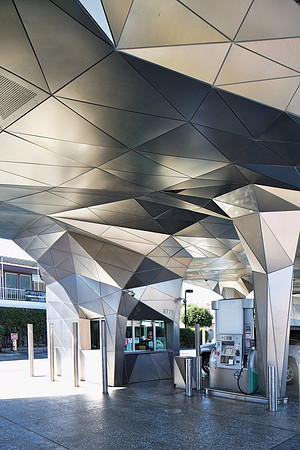
HELIOS HOUSE, LOS ANGELES
The Helios House is a gas station in Los Angeles. It is designed as a green station with special features and is considered to be the "station of the future." It is the first gas station in the United States to be submitted for LEED certification. The gas station was designed by Office dA in Boston and Johnston Marklee Architects in Los Angeles. The purpose of the design was to reinvent the gas station.
The station's roof is designed of triangles made from recycled stainless steel and contains cacti and 90 solar panels. This reduces the energy consumption of the station by 16%. The station's roof is drought tolerant and collects water for irrigation. Built in 2007, it is seen as a Los Angeles landmark. It started out selling BP branded gasoline, but in 2010 switched to ARCO.
Helios House is made of cradle to cradle recyclable stainless steel with a farmed wood facade. CO2 reducing landscaping and grass is planted on roof to reduce the need for mechanical heating or cooling; catch basin prevents runoff into ocean and canopy collects rainwater used for on-site irrigation and to meet station's water needs. LOW-VOC paint is used in back of building and signage is made from recycled material. Energy saving features include: canopy lighting uses up to 20% less energy than traditional gas stations with LED lighting throughout the station, using low amounts of energy to achieve the same brightness. The roof contains 90 solar panels, which can produce the energy needed for 2-3 average American homes and photocells and timers help customize energy needs to time of day and amount of light.